
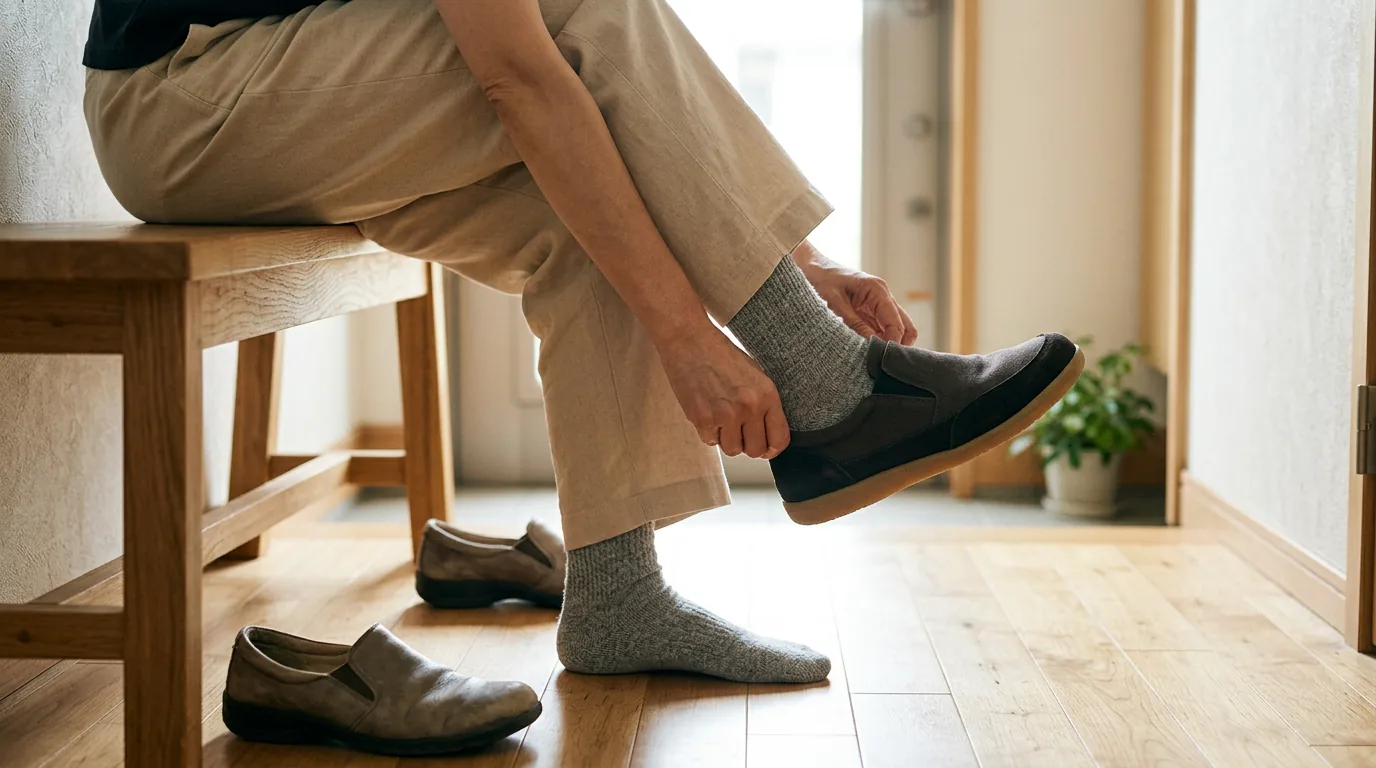
Foot pain often gets better within a few weeks. Learn what to do at home, how to choose the right shoes and which of our articles to read depending on where it hurts.
Foot pain can have many causes and often gets better within a few weeks, but it can sometimes be a sign of something more serious, such as a broken bone. [1] Common causes include exercising too much, standing on hard surfaces for too long, being overweight and wearing shoes that are too tight. [1, 2, 3] Do not try to diagnose the cause yourself. [1]
In this article we bring together what to keep in mind for daily care and choosing shoes, whatever part of your foot hurts, and point you to our related articles for pain in specific areas.
The NHS advice for pain in the bottom of the foot, heel pain and toe pain is largely the same: [1, 2, 3]
For foot pain, the NHS recommends shoes with plenty of room for your feet, a low heel and a soft sole, and advises against high heels and tight, pointy shoes. [1, 2, 3] The American Academy of Orthopaedic Surgeons (AAOS) recommends the following when buying shoes: [4]
According to the AAOS, high-heeled shoes with a narrow toe box can, over time, lead to problems such as bunions, hammer toes and corns, so shoes with a wide toe box and a low heel that suit the shape of your foot are a better choice. Flip-flops put extra stress on the toes, which must grip to keep them on. [4] We explain how sports and walking shoes work with insoles in our sports insoles article.
Where the pain is can give a clue to possible causes; you can find more detail in our related articles:
No. The NHS lists soft insoles, pads or heel pads among the things you can try at home for pain in the bottom of the foot and heel pain, [1, 2] but recommends them alongside rest, suitable shoes and exercise. Insoles alone do not remove the cause of the pain and do not replace an assessment by a doctor; if you think you may have broken a bone, do not try to treat it yourself. [1]
If you are considering custom insoles, our gait analysis article explains how your feet and walking are assessed, and our orthopedic insoles article explains the difference between ready-made and custom insoles.
See a doctor if: [1, 2, 3]
Contact a doctor or go to an emergency department without delay if you have: severe pain; you cannot walk; your foot has changed shape or is at an odd angle; you heard a snap, grinding or popping noise at the time of injury; or you feel faint, dizzy or sick from the pain. [1]
Sources reviewed on 29 November 2026.