
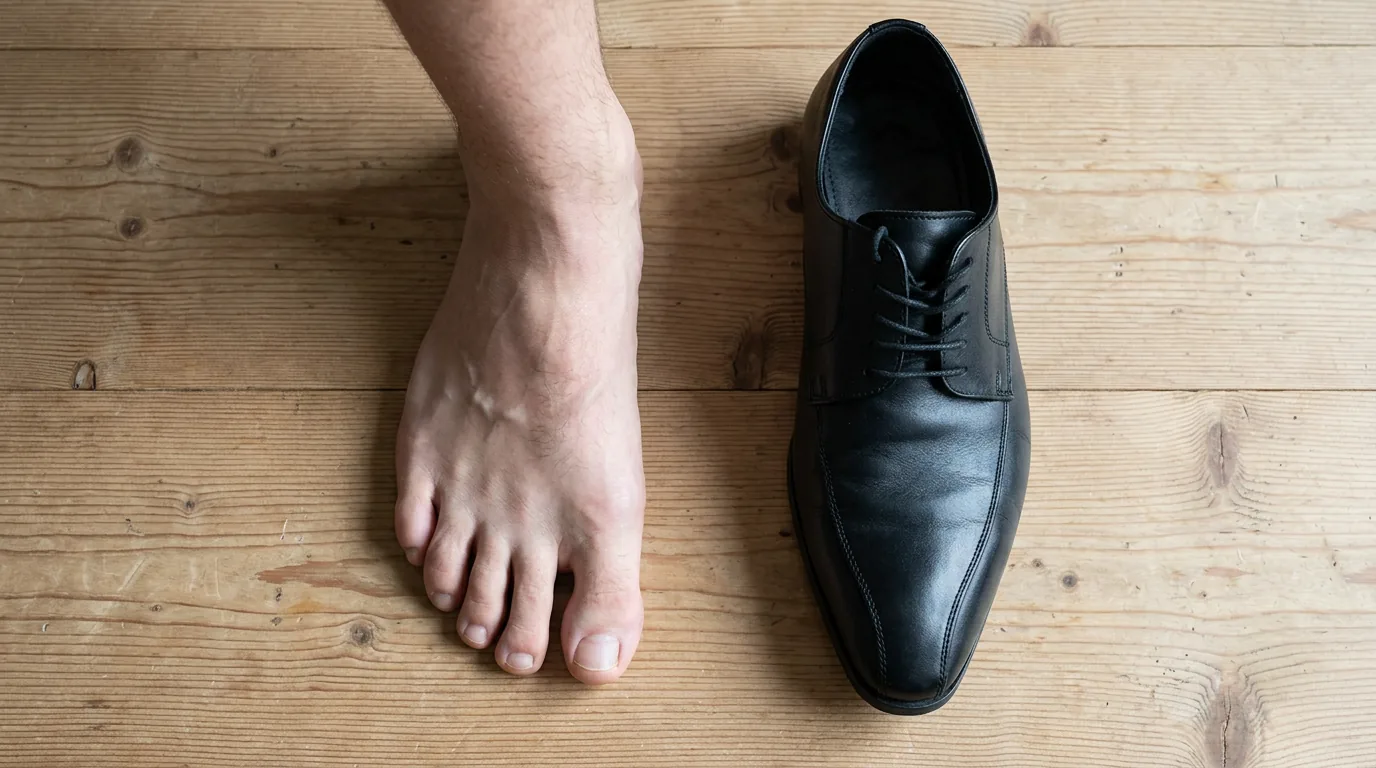
Learn what splayfoot is, its symptoms and causes, and what to look for when choosing shoes.
Splayfoot describes a widening forefoot. Medical sources define it as the metatarsal bones spreading apart and the transverse arch across the forefoot flattening. [1]
A wide foot does not on its own mean this diagnosis. Pain, calluses or difficulty with shoe fit are reasons for assessment. The NHS also advises not trying to diagnose the cause of pain in the ball of the foot yourself. [2]
The metatarsals are five long bones in the middle of the foot, running between the bones near the ankle and the toes. Their ends near the toes form the load-bearing area of the forefoot. We explain pain in this area in our ball of foot pain article.
Physiopedia lists high-heeled and uncomfortable shoes, excess weight, and weakness of the small foot muscles and of the ligaments between the metatarsals as contributing factors. [1] According to the NHS, pain in the ball of the foot can be caused by exercise, tight shoes or a condition such as arthritis, and some foot shapes put extra pressure on the ball of the foot. [2]
To ease pain in the ball of the foot at home, the NHS advises: [2]
Custom insoles work by supporting and cushioning the foot or by changing the way you walk. Guy's and St Thomas' NHS Foundation Trust states that the type of insole is chosen by a foot health professional for the person's condition, and that insoles are usually part of a care plan alongside other measures such as exercises and footwear changes. [3]
According to the same source, new insoles are worn in gradually: up to 1 hour on the first day, then 30 minutes to 1 hour more each day, so that they can usually be worn comfortably all day within 1 to 2 weeks. If they cause severe pain or aching, stop wearing them and tell your specialist. How long insoles are needed also depends on the person: some conditions may need them long term, while they may be stopped once the pain goes away. [3] See our corns and calluses article on pressure.
The NHS advises getting assessed without waiting if you have any of the following; they may be signs of a broken bone after an injury or an infection: [2]
If none of these apply, the NHS advises seeing a doctor if: [2]
Sources reviewed on 24 November 2026.