
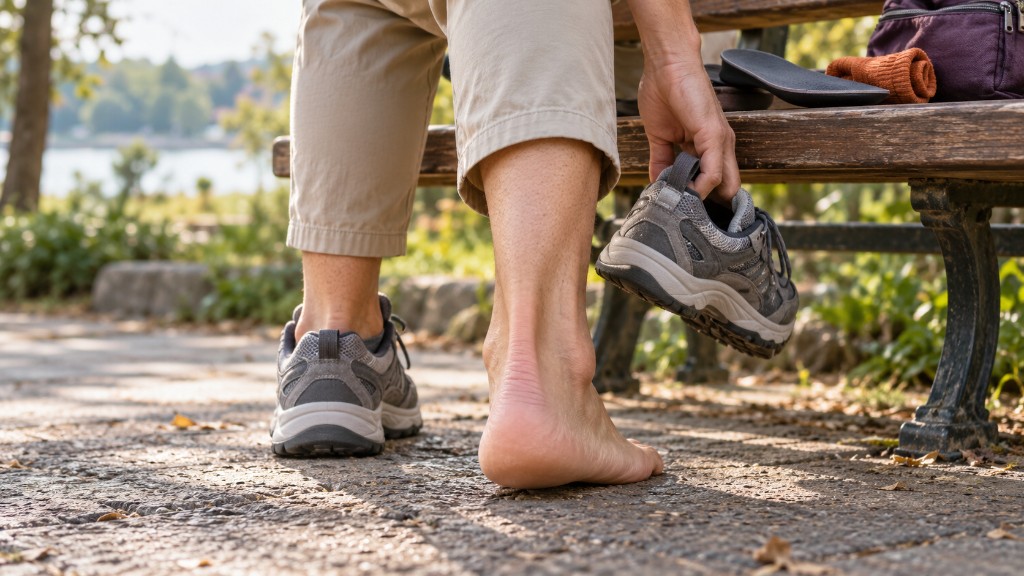
Achilles-related pain may occur behind the heel or along the tendon. Shoe contact, heel lifts and insoles should be considered individually alongside exercise and load management.
Achilles tendinitis is a term used for painful problems involving the tendon that connects the calf muscles to the heel bone. Pain may occur behind the heel or along the tendon, with morning stiffness, difficulty walking or tenderness where the back of a shoe touches the area. However, not every painful spot behind the heel has the same cause.
This article focuses on posterior heel symptoms rather than pain beneath the heel. Activity demands, shoe contact and support options need consideration together. The aim is not simply to cover a sore area with a soft pad, but to understand the symptoms and their effect on everyday movement. For pain under the heel, see our guides to heel pain and plantar fasciitis.
Tendinitis is widely used in everyday descriptions. Tendinopathy is also used, particularly for persistent tendon pain and loading-related problems. It may therefore be unhelpful to think of the issue only as a brief episode of inflammation. The tendon's response to load and its function also matter.
Regardless of terminology, assessment considers location, duration, activity patterns and examination findings. Recognising a similar description online cannot establish which structure is affected. Other tissues and causes of pain behind the heel may need consideration.
Insertional symptoms involve the region where the Achilles tendon attaches to the heel bone. Midportion symptoms occur farther up the tendon. These patterns can occur separately or together. Shoe contact against a sensitive attachment area may be particularly uncomfortable for some people.
| Assessment point | Heel attachment region | Midportion of the tendon |
|---|---|---|
| Symptom location | Around the attachment at the back of the heel. | Along the tendon above the attachment. |
| Footwear relationship | Pressure from the rear edge or stiff section is considered. | Shoe changes and activity demands are reviewed together. |
| Exercise planning | Movement range and compression require particular consideration. | Progressive tendon loading is tailored to the individual. |
| Support options | Guided by examination and shoe fit. | A heel lift may be considered; an orthotic is not automatic. |
This table is not a diagnostic tool. In particular, lowering the heel below the edge of a step should not be attempted without understanding the location of the problem. A programme provided to one person may not be suitable for someone else.
A rapid increase in running distance, speed or training intensity can change the demands placed on the tendon. A sudden increase in everyday walking and changes in footwear are also worth discussing. Symptoms do not occur only in athletes; ordinary activity patterns matter too. For running and walking footwear context, see our guide to sports insoles.
Calf movement characteristics, previous injuries and the shape of the back of the heel may be considered during examination. No single factor establishes the cause by itself. For example, pain beginning with new shoes should not automatically be attributed only to rubbing without considering loading and clinical findings.
Pain and stiffness along the tendon may be noticeable in the morning or after rest. Symptoms may ease briefly with movement and increase after more walking or running. Some people describe pressure behind the heel when putting on shoes; others notice particular tenderness the day after activity.
Thickening or swelling may also be observed. Explain how long symptoms have been present, whether one or both sides are affected and how ordinary tasks are limited. Brief relief does not establish that the tendon is ready for the full previous level of activity.
Check exactly where the rear edge of the shoe makes contact. A model that presses firmly against a sensitive area can be uncomfortable even when the size is correct. A softer contact surface may help some people, but secure retention matters alongside softness.
Try footwear with usual socks and any existing support. During a short walk, check heel slippage, rubbing at the back and compression around the forefoot. Open-backed footwear may reduce contact pressure, but it is not suitable for everyone's work, safety requirements or movement needs.
Shoe wear and changes in sole construction compared with a previous model are also relevant. Rather than recommending one heel height for everyone, consider the particular shoe and its relationship to symptoms. If a new insert causes the heel to lift out of the shoe, the fit needs review.
A heel lift may be used in selected circumstances to temporarily alter ankle movement conditions during activity. The product, duration and height require individual planning. Copying someone else's lift height or number of layers is not appropriate.
A heel lift and an arch-supporting orthotic are not the same device. Evidence for routine orthotic use in midportion Achilles tendinopathy is inconsistent, so an insole should not automatically be recommended to everyone. A separate foot-related need can be assessed on its own merits.
Support does not replace appropriate exercise and activity management. Seek a fit review rather than forcing continued use if a new product causes significant pain, numbness or skin irritation. Follow the agreed plan instead of stacking pads or cutting and altering the device yourself. For breaking in and care, see our guide on how to use insoles.
Adjusting a provoking load is different from stopping all movement indefinitely. Suitable loading and strengthening are important parts of rehabilitation. Exercise type, movement range and progression depend on symptom location and the person's condition.
Rather than immediately starting intensive stretches or step exercises found online, proceed with appropriate assessment. At follow-up, discuss symptoms after exercise and the following morning as well as how the exercise feels at the time. A single repetition count or recovery timetable cannot be given to everyone.
Seek advice from an appropriate healthcare professional if pain recurs, worsens or limits walking. Imaging may be arranged where indicated; not everyone needs the same test. A pressure assessment cannot rule out a tendon tear or independently confirm Achilles tendinitis.
A sudden pop behind the calf or heel, a feeling of being kicked, marked new weakness or difficulty pushing off during walking requires urgent assessment for a possible rupture. Do not wait while trying a different shoe or insert, and do not begin exercise or forceful stretching in that situation.
A useful approach starts with understanding where pain occurs and managing daily loading appropriately. Bring frequently worn shoes, existing supports and activity notes when discussing footwear and support options. This makes the assessment relevant to everyday needs. You can arrange a discussion suited to your needs.