
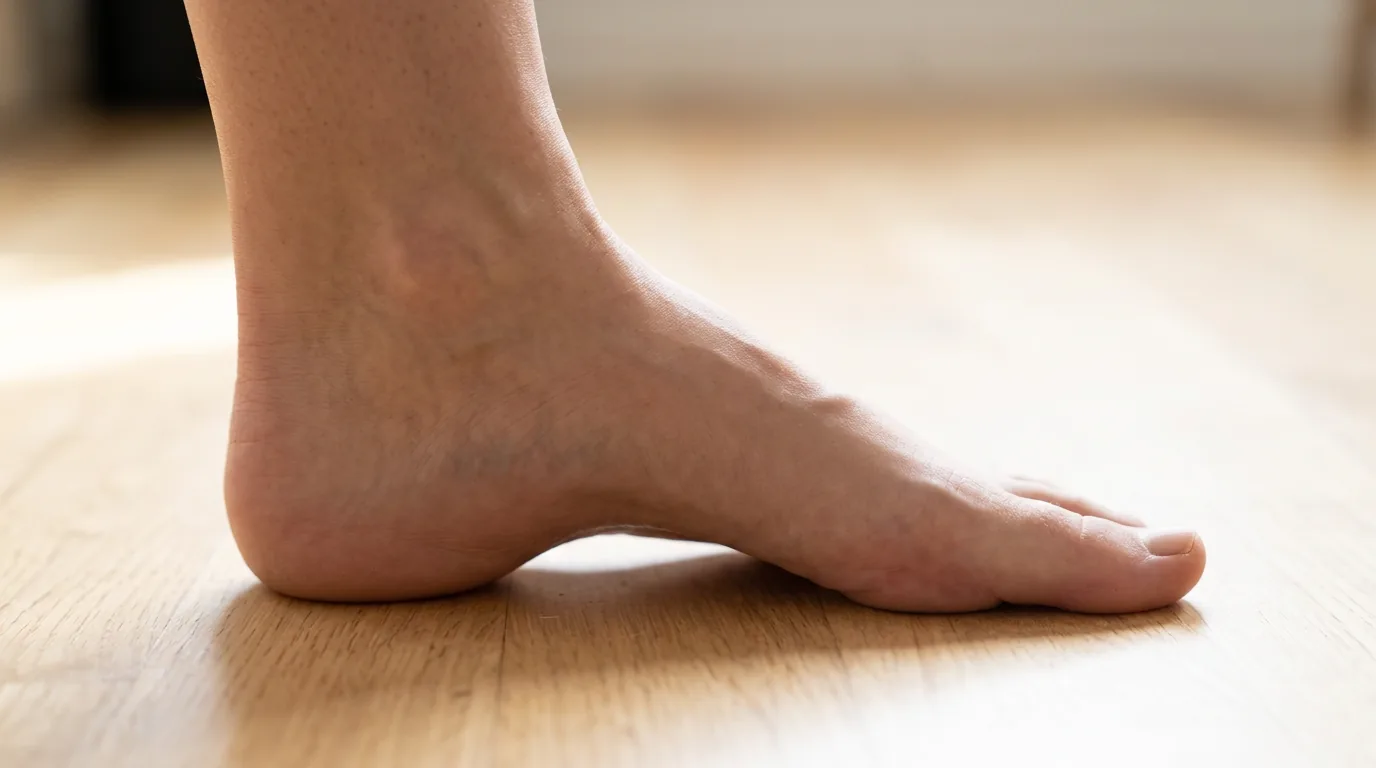
High-arched feet (pes cavus) are a foot shape in which the inner arch is higher than usual. Learn the symptoms, possible causes, shoe and insole options and when to see a specialist.
High-arched feet (medical name: pes cavus) are a foot shape in which the inner arch is higher than usual. When standing, the middle of the foot touches the ground less and load is carried mainly on the heel and forefoot. [1, 2, 3]
High arches do not always cause symptoms. Pain, frequent ankle sprains or difficulty with shoe fit are reasons for assessment. [2]
One or more of the following may occur: [1, 2, 3]
The type and severity of symptoms vary between people; not everyone has all of them, and some people have none. [2, 4]
High arches can develop at any age and can affect one or both feet. Some people are born with them; in others they develop later. [2, 3] A common cause is a condition that affects the nerves and muscles, for example Charcot-Marie-Tooth disease, an inherited neuropathy. [2, 3, 4] For this reason, people with high arches are advised to be checked for nerve and bone conditions. [1] In some severe cases, no specific cause can be found. [4]
High arches caused by a nervous system condition can get worse over time; without such a cause, the shape of the foot usually does not change. [3, 4]
No. High arches describe the shape of the foot; supination describes how the foot is loaded when walking. In people with high arches, load can shift to the outer edge of the foot, but not in everyone. We cover loading patterns and insole choice in our supination article.
In mild cases, suitable shoes and arch supports may give relief. [1] Custom orthoses, shoe modifications and, when needed, ankle bracing are also among the treatment options. [3, 4] Shoes that hold the heel steady and offer enough cushioning and width at the forefoot can be preferred. An insole aims to fill the arch and spread load over a larger area; the right model is chosen after an examination and, if needed, a pressure measurement. See our orthopedic insoles article for the difference between ready-made and custom options.
Assessment includes the family history and an examination of the foot; X-rays or a neurological evaluation may be requested if needed. [3, 4] Surgery may be considered in severe cases or when non-surgical treatment is not enough. [1, 3]
Sources reviewed on 23 November 2026.