
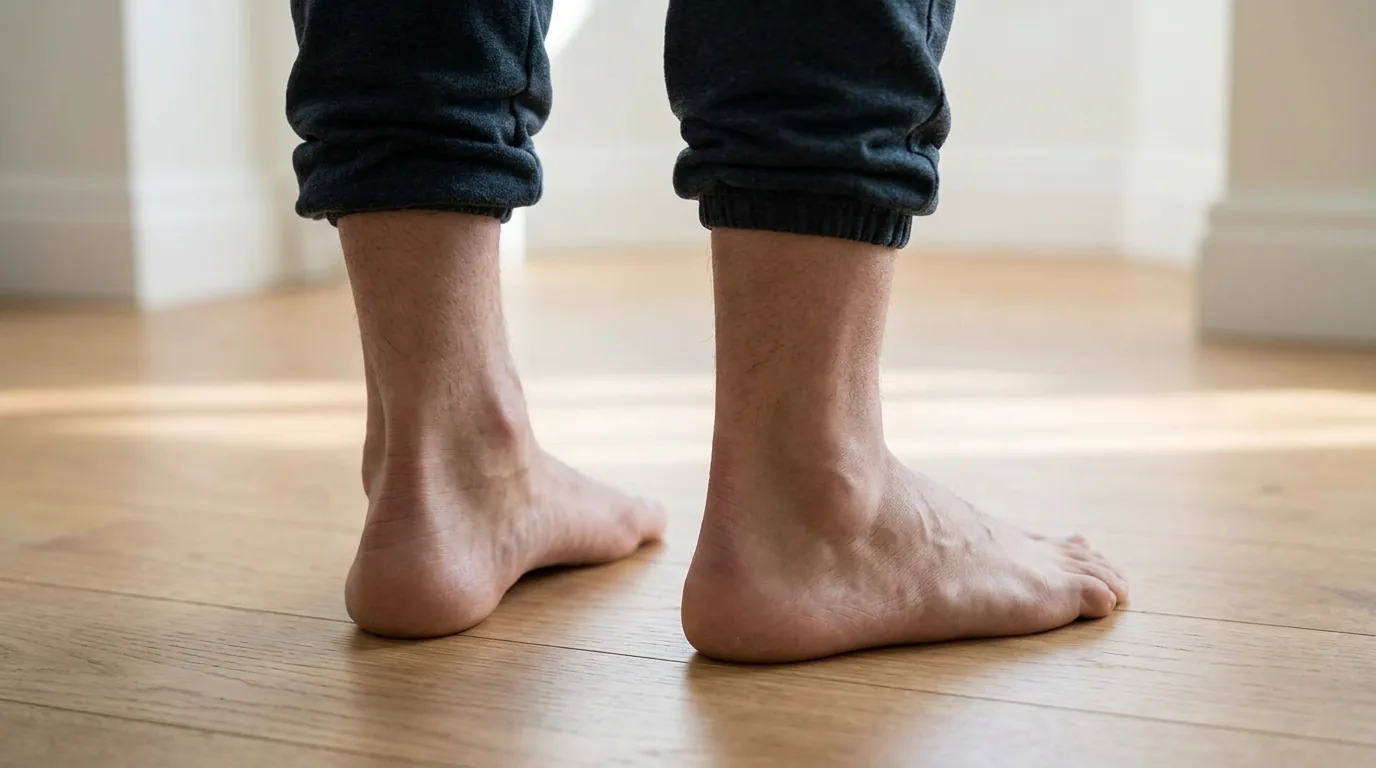
Adult-acquired flatfoot is when a previously normal arch drops over time in adulthood. We summarise a common cause, the symptoms and when to see a doctor.
Adult-acquired flatfoot describes a previously normal foot arch dropping over time in adulthood. [1] Most children have flat feet, and the arch usually develops between the ages of 3 and 10; flat feet often cause no problems. [2] Flat feet that appear later in adult life, or affect only one foot, are a different matter and need to be assessed. [1, 2]
A common cause of adult-acquired flatfoot is posterior tibial tendon dysfunction. This tendon wraps around the back of the inner ankle to reach the foot and helps maintain the arch. [1] Most sources agree that the problem tends to progress over time. [1] The NHS also notes that, rarely, flat feet can result from stretching of the tissues in the feet, possibly after an injury, with ageing or with being overweight. [2]
The NHS advises people with flat feet to see a doctor if: [2]
Examination is important for diagnosis; further investigation is often needed to identify the cause and the stage of the problem. [1]
In the early stage, treatment starts with non-surgical methods: resting the foot or temporarily limiting its movement, supports such as a heel wedge or an ankle–foot orthosis, painkillers and physiotherapy. Once the swelling has settled, physiotherapy aims to strengthen the posterior tibialis muscle. [1] The NHS says that wide, comfortable shoes with a low heel, insoles, stretches and exercises, and painkillers can help with pain and stiffness, but do not change the shape of the foot. [2] In adult-acquired flatfoot, treatment is planned according to the underlying cause and the stage of the problem. Where non-surgical treatment is not enough or the deformity progresses, the doctor may consider surgical options. [1] The doctor decides the treatment plan.
Insoles can support the foot and help with pain and stiffness; they do not permanently change the shape of the foot. [2] We explain the selection criteria in our insoles for flat feet article. Exercises can be added to the programme on the advice of a doctor or physiotherapist; for home exercises and their limits, see our flat feet exercises article.
Sources reviewed on 26 November 2026.