
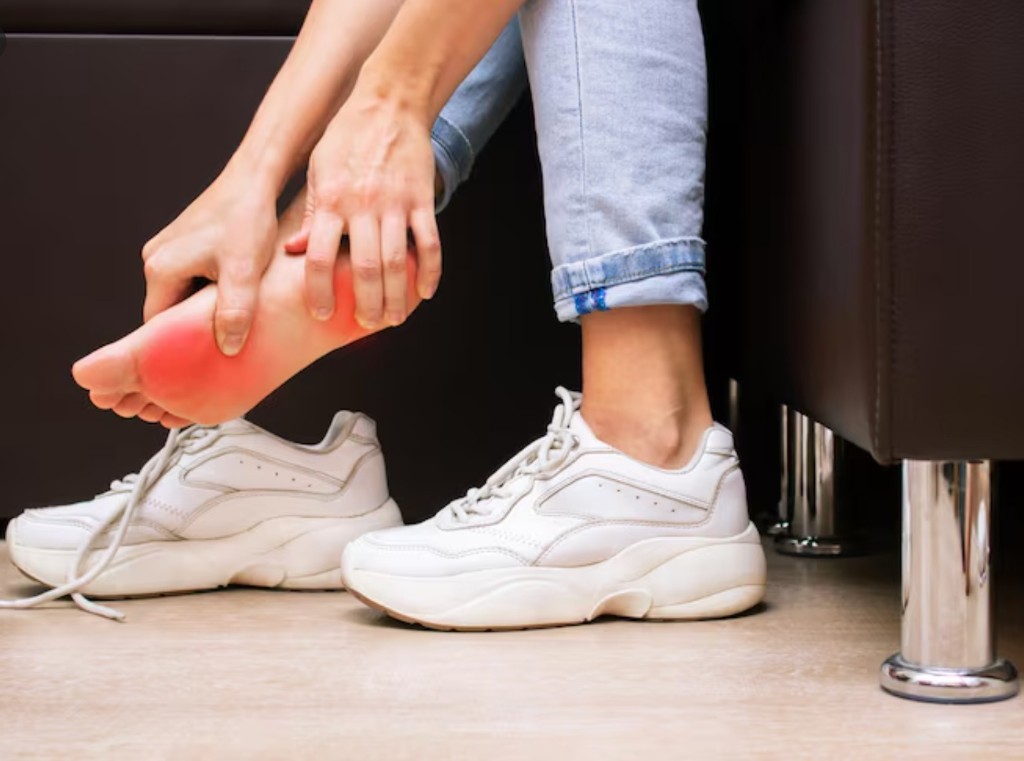
Heel pain on the first steps in the morning or later in the day can have different causes. Learn why location and timing matter, and how footwear and insoles fit into assessment.
Heel pain may arise from the plantar fascia, Achilles tendon, surrounding tissues or bone. Pain during the first steps after getting out of bed is common in plantar fasciitis, but that symptom alone does not establish a diagnosis.
An insole recommendation should consider more than a symptom label. Location, onset, daily loading and examination findings belong in the assessment together.
Pain under the heel differs from discomfort at the back, near the Achilles tendon. Plantar fascia-related problems may be considered for pain underneath; the Achilles tendon and surrounding tissues may be assessed for pain behind the heel.
Explain whether the pain is localised or spread out and whether one or both feet are involved. Pointing to the area is useful, but pressing on it yourself does not establish the cause.
With plantar fasciitis, the first steps after sleep or prolonged sitting can be painful. Symptoms may ease with movement before increasing again during extended standing, walking or running.
This pattern can suggest a problem involving the plantar fascia, a band of tissue along the sole. However, morning pain is not specific to one condition, and accompanying symptoms can change the assessment.
No. A heel spur is a bony projection that may appear on an X-ray, while plantar fasciitis concerns the plantar fascia. They may coexist, but they are not interchangeable terms.
Spurs can also be found in people without heel pain. An imaging finding should therefore not be treated as the complete explanation, or care reduced to the aim of “removing the spur”. If a heel spur on imaging has already been discussed, you can also read our product-focused guide to insoles for heel spurs.
Changes in walking or running volume, prolonged standing at work and footwear may be discussed. These help explain the circumstances, but no single factor explains everyone's pain.
Note what changed before symptoms began: a new sport, longer working hours or different shoes. Duration, surface and recent changes are more informative than simply saying that you walk a lot.
The table is a discussion aid, not a way to diagnose yourself.
| Observation | Why it matters |
|---|---|
| Pain under the heel with the first steps after rest | Plantar fascia-related causes may be investigated |
| Pain at the back of the heel that increases with activity | The Achilles tendon and nearby tissues may need assessment |
| Tingling or reduced sensation | A purely mechanical cause should not be assumed |
| Sudden pain after injury, a snap or inability to bear weight | Urgent medical assessment is needed |
| Recurring pain or difficulty with normal activities | Arrange a clinical assessment |
If you have diabetes, report new foot pain promptly. Associated redness, noticeable warmth, a wound or discharge should prompt same-day assessment.
A clinician considers symptom duration, location, health history and activities. Foot and ankle movement, tender areas and, when appropriate, walking may be examined.
Not every case needs an MRI or ultrasound scan. Imaging depends on findings and the need to investigate alternative causes. You do not need to select your own scans before considering insoles.
A suitable insole or heel support may be considered to modify loading and improve comfort for some people. The cause of the pain, foot structure and footwear fit should guide selection.
The 2023 plantar fasciitis clinical practice guideline advises against prefabricated or custom foot orthoses as an isolated treatment for short-term pain relief, while allowing their use alongside other treatments. Products should therefore be considered within a wider plan.
Ask which symptom the support targets, what other steps are needed and how benefit will be reviewed. Custom manufacture should not be assumed to be the first or essential choice for everyone. After a recommendation, our guide to how to use insoles covers fitting, adaptation and care.
Pressure analysis can help examine loading across the foot under particular measurement conditions. When appropriate, it can be interpreted alongside examination, symptom history and observation of walking. Preparation and measurement are discussed in our gait analysis guide.
A pressure map does not confirm plantar fasciitis or exclude a fracture or tendon injury. Measurement is not essential for every painful heel and does not replace a medical examination.
Choose comfortable footwear that does not squeeze the foot and offers suitable support. Discuss adjustments to prolonged standing or intense activity that aggravates symptoms; avoid increasing distance despite pain.
Stretching and exercise may be appropriate for selected people. However, a generic “heel exercise” found online may be unsuitable for pain at the Achilles insertion or after trauma. Check that the programme matches your problem.
Arrange a consultation if symptoms worsen, recur or limit normal activities. Lack of improvement after around two weeks of appropriate self-care is also a reason for assessment; serious symptoms should not wait for that period.
At review, explain how morning first steps and daily walking have changed, rather than only giving a pain score. If using insoles, bring them with the footwear. Ask for a fit review instead of pushing through new pressure or pain.