
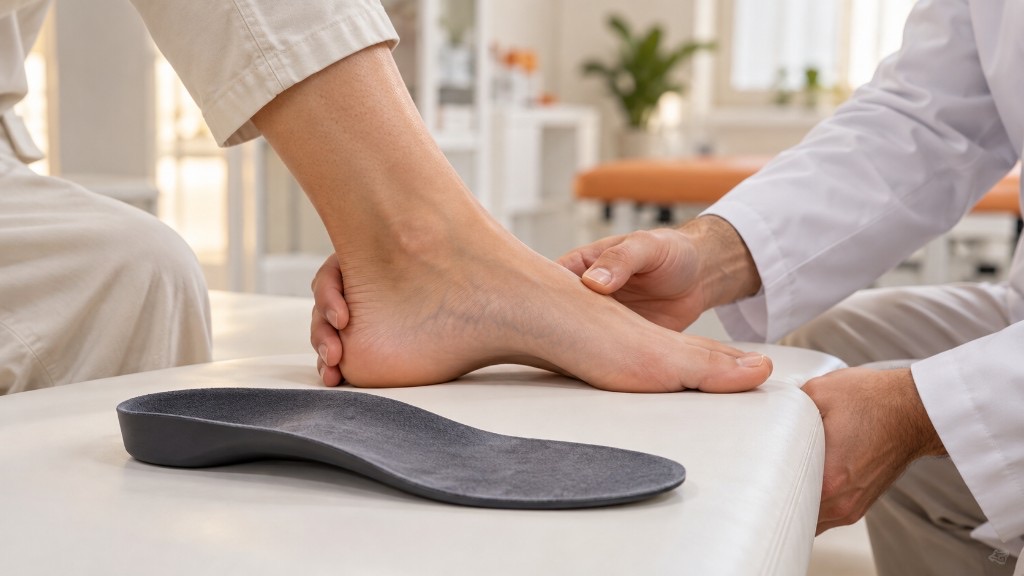
Loading the outer edge of the foot and walking with the toes pointing outwards are different observations. Learn how this distinction affects assessment, high-arch care and insole selection.
Loading the outer edge of the foot and walking with the toes pointing outwards are different observations. High arches may be associated with increased outer-edge loading, but the appearance of the foot alone does not determine whether insoles are needed.
Symptoms, flexibility, walking pattern and footwear fit should be considered together. A suitable insole may help some people feel more comfortable; it is not necessary for every outward-looking walking pattern.
Before choosing a product, clarify what you have noticed. Feeling more pressure on the outer side of a foot, seeing the toes point outwards and noticing outer shoe wear are separate observations.
| Term or observation | What does it describe? |
|---|---|
| Increased outer-edge loading | More noticeable pressure on the outside of the foot; this may be associated with a tendency towards supination |
| Out-toeing | Feet pointing outwards relative to the direction of walking |
| High arches | An elevated arch along the inside of the foot; also called pes cavus |
These features may coexist, but the terms are not interchangeable. Choosing an insole solely to change the direction the toes point can delay an appropriate assessment.
Pes cavus describes an unusually high inner longitudinal arch. In some high-arched feet, loading becomes concentrated in particular areas and there may be a tendency to load the outside of the foot during walking.
Arch height does not explain the whole problem. Flexibility and the person's difficulties also matter. A painless foot and a stiff foot that limits walking should not receive the same advice based on appearance alone.
High-arched feet may be associated with pain around the ball or heel, calluses at pressure points and a feeling of ankle instability. Other conditions can produce similar symptoms, so these findings alone do not establish a diagnosis.
Describe the location and timing of your discomfort. Does it start after a working day, during a long walk or in a particular shoe? Has it changed your activities recently? Specific examples make the assessment more useful.
Shoe wear can be discussed during an examination, but it does not independently prove excessive supination or a need for insoles. The shoe, its time in use and walking habits may also influence what you observe.
Bring frequently worn footwear to the appointment. Ask for wear patterns to be considered alongside symptoms and walking, rather than using a photograph of the sole as the only basis for a product recommendation.
Speak with an orthopaedic or rehabilitation clinician about repeated sprains, persistent pain or increasingly difficult walking. Referral to a foot and ankle specialist may be appropriate.
An arch that becomes progressively higher, a new marked difference between the feet, numbness or weakness also deserves attention. Some cases of pes cavus are associated with neuromuscular conditions; having a high arch does not by itself mean that such a condition is present.
In children, outward-pointing feet and progressive high arches should be considered separately. Pain, limping, developmental concerns or a worsening walking pattern should prompt a discussion with the child's doctor or a paediatric orthopaedic clinician.
Pressure analysis can help examine loading across different parts of the foot under the conditions of the measurement. The result should be interpreted alongside foot shape, walking and symptoms.
Ask, “What question is this measurement intended to answer?” and “How will the result change the recommendation?” A coloured pressure map does not independently establish a diagnosis or replace a medical examination investigating the cause.
Start by identifying a purpose, such as relieving a particular pressure area, improving walking comfort or supporting the foot. The choice may differ between flexible and rigid feet and should account for the intended footwear.
Do not assume that every high arch needs a higher or harder arch support. Support and cushioning should be assessed for suitability. Avoid adding wedges or lifts yourself to force the foot into a different position.
Insoles should not be presented as a guaranteed permanent correction of arch shape or rotational alignment of the leg bones. Any benefit should be reviewed against the symptom the recommendation is intended to address.
The choice should reflect more than price or a product name. Required adaptations, foot shape, symptoms and available space inside the shoe should be considered together.
If custom insoles are recommended, ask, “Which features will be adapted to my needs?” If a prefabricated option is suggested, clarify the trial and review plan. No product should be assumed to be the best choice for everyone.
Try the insole with the shoes you intend to use. Check that the toes have enough room, the heel stays comfortably held in the shoe and the insole sits properly inside it.
Agree on a wearing and adaptation plan with the professional recommending the product. Report new pain, pressure marks or continuing discomfort instead of increasing wear despite pain. At review, describe which activities feel easier, rather than only saying that you have become used to the product.
Stretching, strengthening or balance exercises may be recommended according to the examination findings. A single programme found online should not be assumed to suit every case of outer-edge loading or out-toeing.
Marked stiffness, progressive deformity or ongoing loss of function may require consideration of options beyond insoles. The underlying cause and effect on daily life guide the plan.