
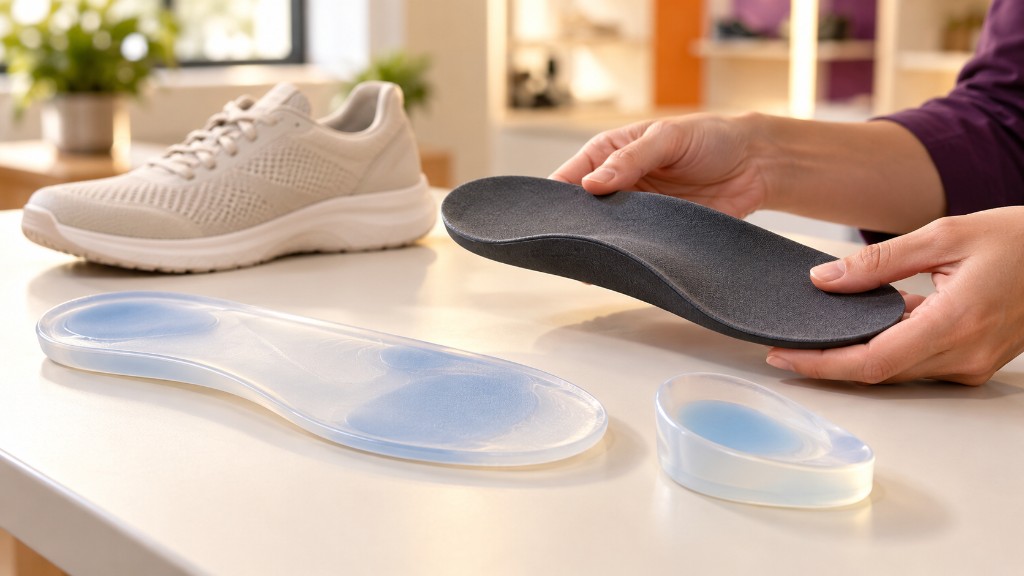
Silicone inserts may be considered for cushioning or local comfort, while custom orthotics describe an assessment-based production approach. Material labels, design and shoe fit should be reviewed together.
Silicone insoles are among the inserts considered for cushioning or comfort inside footwear. However, products sold under this name do not all have the same shape, thickness or purpose. A full-length insole, a heel cup and a forefoot pad make contact with different areas. Before choosing an insert, consider what the particular product is designed to do rather than relying on its material name.
The question “silicone or custom orthotics?” also compares two different kinds of description. Silicone refers to a material, while custom-made describes how a device is assessed and produced. Suitability depends on symptoms, footwear and daily use as well as how soft a product feels.
Product descriptions may use silicone and gel together. Even so, do not assume that every gel insert has the same composition or support characteristics. Check the material information, instructions and intended placement. Colour or a transparent appearance alone cannot establish what a product contains or how it functions.
A full-length insert should not automatically be treated as interchangeable with a small heel pad. A heel cup primarily contacts the heel, while a forefoot support has a different position and purpose. The word gel does not mean that the whole foot receives the same type of support.
Cushioning inserts may make contact between the foot and the shoe more comfortable. Heel cushions can help absorb impact at the heel during walking or running. Some supports are considered to ease pressure at a particular contact area. The intended effect depends on the product's design and appropriate placement. For heel-related discomfort, see our guide to heel pain.
However, a silicone insole is not a treatment for every cause of foot pain. Simply adding a softer layer may be insufficient when the reason for discomfort is unclear. Brief relief while wearing an insert does not prove that the underlying problem has been resolved or that assessment is unnecessary.
Cushioning can improve the feel of contact and help accommodate loading at an area. Structural support uses a device's shape and properties to support the foot or influence how it is loaded. These aims can be combined within one device; they are not mutually exclusive categories.
A very soft product does not necessarily offer better support. A firmer device is not necessary for every foot either. The useful question is which need the insert is intended to address. Seeking end-of-day comfort, managing recurring forefoot pain and protecting a specific pressure area should not automatically lead to an identical choice. People who stand for long periods may also find our guide to foot fatigue useful.
| Assessment area | Ready-made silicone or gel support | Custom-made foot orthotic |
|---|---|---|
| Production | Supplied in standard sizes or designs. | Made according to individual assessment and identified needs. |
| Purpose | May offer cushioning, local comfort or support, depending on the product. | Can be planned around particular support or pressure-relief goals. |
| Adjustment | Limited to changes allowed for the product. | Professional adjustment may be possible depending on the design. |
| Shoe fit | Shape and thickness need to be checked in the intended shoe. | Still needs checking in the intended shoe despite being individually made. |
| Selection | Purpose, symptoms and fit are considered together. | Assessment findings and follow-up needs guide the choice. |
Custom orthotics are not compulsory for everyone or automatically more effective in every situation. A suitable prefabricated device may be enough for some people. Custom manufacture does not mean one standard rigid construction: different materials and support aims can be used. Price alone cannot determine the appropriate option. You can also review general differences in our guide to orthopedic insoles.
An insert takes up space inside a shoe. Adding a thick support to tight footwear can create pressure over the toes or the top of the foot. A heel cup may also change how the heel sits inside the shoe. Try the product with the shoes and socks you actually intend to wear.
During a fitting, check whether the heel slips, whether the toes remain comfortable and whether the insert sits flat. Removing the shoe's original liner depends on the footwear and device design. Rather than stacking supports or cutting an insert at random, follow the instructions and seek advice where needed. A custom orthotic will not automatically fit every shoe either.
Instead of immediately testing a new device during a full work shift, consider increasing use according to the advice supplied. During shorter trials, notice where contact is felt and whether any new pressure points develop. One introduction schedule or daily wearing time cannot be applied to every product.
Sharp pain, numbness, blistering or significant irritation should not be dismissed as a necessary adjustment phase. Stop using the insert and arrange a review of its suitability. Adding another soft layer and continuing to wear an uncomfortable support may not solve the problem. For breaking in, cleaning and replacement, see our guide on how to use insoles.
Follow the particular product's care instructions. Some inserts can be wiped clean, while others allow hand washing. A fabric cover, adhesive or combination of materials means that the silicone label alone is not enough to decide how to clean the device. Avoid machine washing or direct heat unless the manufacturer specifically permits it.
Tearing, marked distortion, surface damage or slipping inside the shoe are reasons to reassess an insert. If comfort declines, check the condition of the shoe as well as the support. There is no universal replacement timetable: the product and how it is used both matter.
Persistent, recurring or activity-limiting pain should prompt assessment of the cause before simply choosing another product. People with diabetes, circulation problems or reduced sensation should seek professional guidance rather than selecting a ready-made support unaided. Wounds or continuing skin irritation also need attention.
Seek urgent medical help if you cannot bear weight, the foot changes shape after an injury or pain is severe. Trying a silicone heel cup or an insole does not replace a necessary examination in these circumstances.
Choosing silicone insoles means considering the intended purpose and shoe fit as well as the product name. When discussing options, bring the footwear you use and any existing inserts, and explain your symptoms. This helps make the assessment relevant to your daily needs. You can arrange a discussion suited to your needs.