
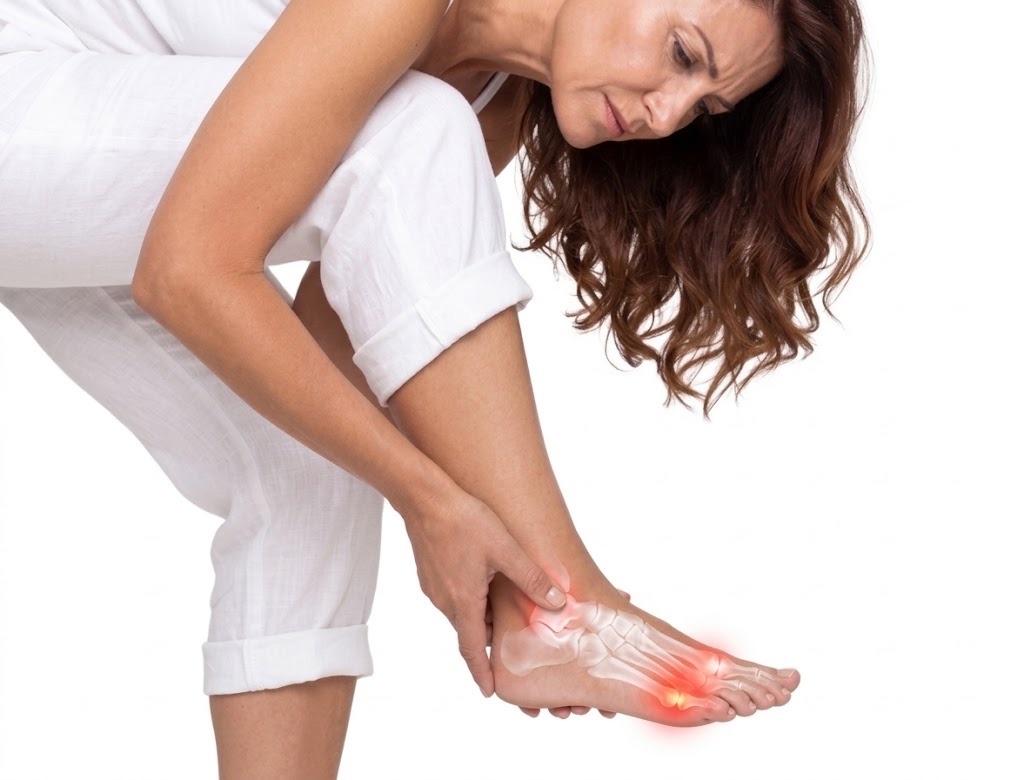
Pain under the forefoot may be called metatarsalgia, but the cause is not the same for everyone. Learn how pressure distribution, shoe fit and insole assessment fit into the review.
Ball-of-foot pain can feel like an ache, a tender patch or a burning sensation just behind the toes. People may describe it as pain in their metatarsal bones, but the discomfort does not necessarily come from bone itself. Joints, surrounding soft tissues, nerves and areas of thickened skin can produce symptoms in a similar region. Understanding where the pain is and when it appears comes before choosing an insert.
Metatarsalgia is a general term for pain under the forefoot. It describes a location rather than confirming one particular disease. Two people who point to the same part of the foot may need different assessments and different forms of support.
The metatarsals are the long bones between the middle of the foot and the toes. Their ends near the toes help form the weight-bearing ball of the foot. Metatarsalgia is usually felt beneath this region, behind one or several toes.
Some people describe a pebble inside the shoe. Others notice tenderness after a longer walk. These descriptions help guide an assessment, but they cannot establish a diagnosis by themselves. Pain across the top of the foot, pain within a toe joint and pressure beneath the forefoot should not automatically be treated as the same complaint.
A change in loading is one possible contributor. Spending longer on your feet, suddenly increasing walking distances or changing running sessions can demand more than the tissues are used to. Tight shoes can squeeze the forefoot, while high heels shift more load towards it.
Foot structure can also influence the assessment. A high arch, changes in toe position and hallux valgus may affect the way load passes through the foot. Their presence does not mean pain is inevitable. The useful question is how the individual finding relates to the person's symptoms and daily activity.
Other possible contributors include thinning of the natural cushioning beneath the forefoot, irritated tissues around a joint and joint disease. A callus may indicate a repeated area of pressure or friction. Looking only at the hardened skin can miss the conditions that keep loading the same spot. You can also review pressure and friction in our guide to foot corns and calluses.
| Symptom pattern | Why it matters during assessment |
|---|---|
| Diffuse tenderness after new shoes or increased walking | Footwear fit and changes in activity need review. |
| Burning, tingling or numbness spreading towards the toes | Nerve-related causes may need consideration. |
| Marked tenderness at one point with swelling | A clinician may need to assess for a stress injury. |
| Pain at a patch of thickened skin | The skin and the underlying loading pattern should both be reviewed. |
This table is not a diagnostic tool. Morton's neuroma and a stress fracture, for example, do not require identical management. Localised pain and swelling after an increase in activity should not simply be interpreted as evidence that an insole is needed.
Pressure distribution describes how the foot shares load across its contact areas. Standing and walking are different situations: contact changes throughout a step. The assessment also needs to consider the shoes the person wears, the demands of their work and the movements that bring on discomfort.
Where appropriate, pressure measurement can provide information alongside an examination. A coloured pressure map alone cannot establish why the foot hurts. It cannot rule out a stress fracture or nerve problem, and it does not replace a necessary medical examination or imaging. A measurement should not automatically lead to the same insert being recommended for everyone. Preparation and measurement are discussed in our gait analysis guide.
The front of the shoe needs enough width and depth for the forefoot and toes. Buying a longer size does not always solve a narrow toe box. A shoe that slips at the heel while still squeezing the forefoot may remain unsuitable.
A low heel, sufficient cushioning and a fastening that holds the foot without compression are features to discuss. Try the shoes during a short walk rather than judging them only while seated. Include the intended insole in the fitting: an added insert takes up space inside the shoe. Avoid relying on a tight shoe eventually stretching enough to become comfortable.
The aim of an insole assessment is to consider whether support could reduce loading at a sensitive area and improve comfort. A cushioned prefabricated insert may suit some people. Others may need different support features or an individually adjusted device. Neither softness nor price alone determines the most appropriate choice.
A metatarsal pad or dome is intended to redistribute forefoot loading when positioned appropriately. It is often placed just behind the metatarsal heads, with its precise position guided by the person's foot and symptoms. Randomly sticking a thick pad directly under the painful spot is not equivalent. New focal pressure or numbness is a reason to stop forcing its use and have the fit reviewed. Fitting and adaptation are covered in our guide to how to use insoles.
Reducing time spent on a provoking activity and taking breaks may be discussed as part of the initial plan. Continuing to increase running distance through pain is not a suitable strategy. Exercise and return-to-activity decisions should be guided by a healthcare professional when an injury is suspected.
Keep a brief record of which shoes you wore, how long you walked and exactly where discomfort appeared. Bringing frequently worn shoes and any existing inserts to an appointment makes the discussion more specific. When trying a new support, consider daily comfort and any new pressure points rather than only the immediate sensation of cushioning.
Arrange a medical assessment if pain limits ordinary activities, keeps returning, gets worse or does not improve with a short period of reduced loading and appropriate footwear. Numbness, reduced sensation or foot pain in someone with diabetes should not be left unassessed.
Seek urgent medical care if you cannot bear weight, the foot changes shape after an injury, pain is severe or the foot becomes hot, red and swollen. Fever or shivering alongside foot symptoms also needs prompt attention. Trying another insert is not a substitute for medical assessment in these circumstances.
A useful approach to ball-of-foot pain combines an understanding of the cause, a review of footwear and activity, appropriate support where indicated and follow-up. When discussing insole options, share the demands of your usual day so that the conversation addresses how you actually use your feet. You can arrange a discussion suited to your needs.