
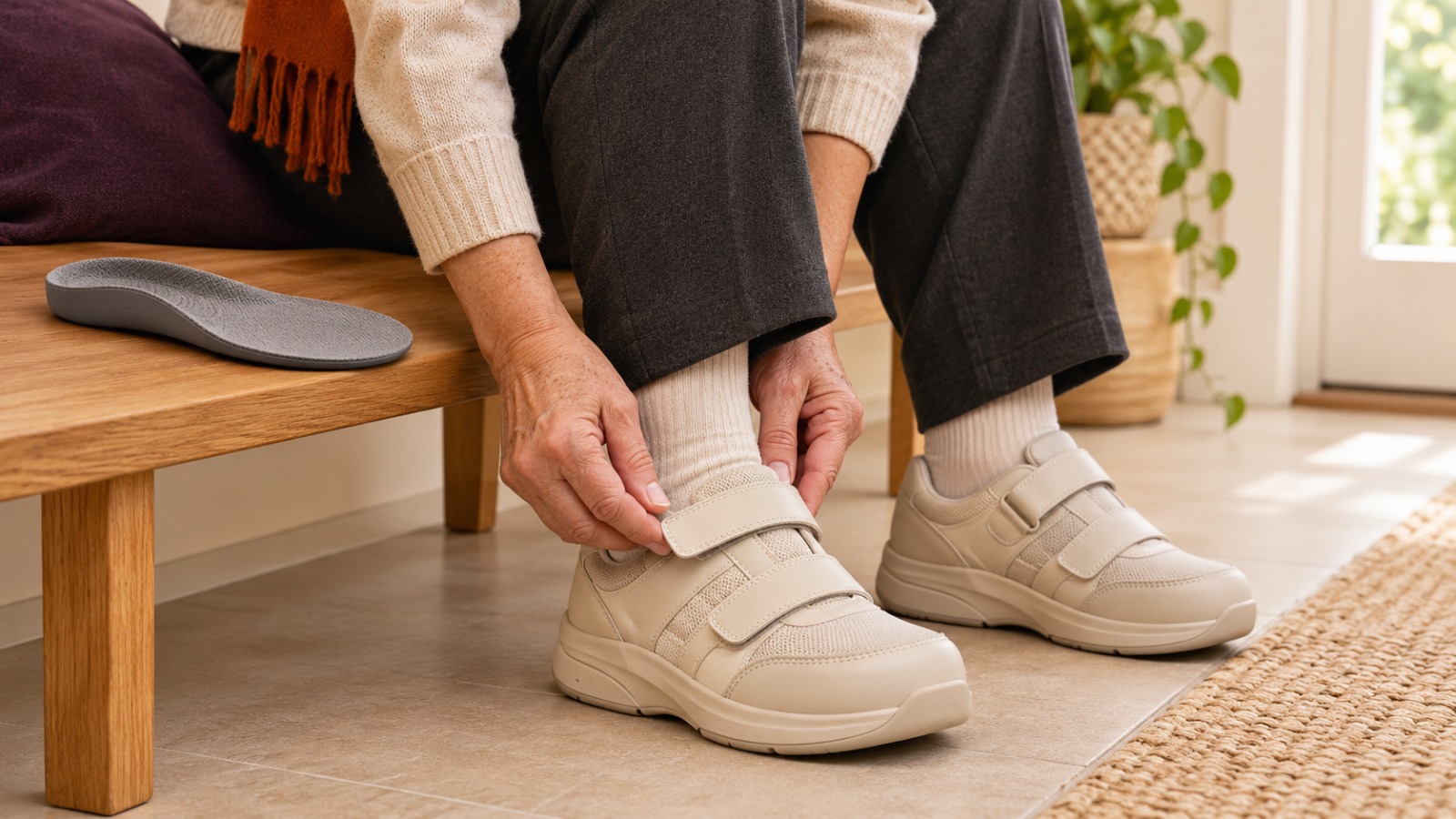
Loss of sensation can make foot injuries harder to notice. Daily checks, properly fitted footwear and follow-up based on individual risk are central to preventive care.
Diabetic foot refers to foot problems related to diabetes, including ulcers, infections and other tissue damage. Nerve damage can make it difficult to notice a shoe rubbing or a sharp object underfoot. Reduced blood flow may make a wound harder to heal. A foot can have a significant problem without hurting.
Preventive care starts with knowing your risk and noticing changes early. Daily checks at home support this work. Footwear and insole decisions should also reflect what your healthcare team finds during a foot assessment.
Look at the tops, soles and heels of both feet, as well as between the toes. Use a mirror or ask someone for help if the sole is hard to see. Look for a new blister, cut, crack, discharge, change in colour or swelling. If the same area repeatedly becomes red, noting which shoes you wore can help during an assessment.
Wash your feet in lukewarm water and dry them thoroughly, particularly between the toes. Moisturiser can help with dry skin, but avoid applying it between the toes. Do not cut calluses or use acid-based corn or callus removers yourself; pressure and rubbing are discussed further in our guide to foot corns and calluses. If you have reduced sensation, avoid walking barefoot and do not apply a hot water bottle directly to the foot. Ask your care team for help with nail care if you have reduced sensation, difficulty seeing your feet or a nail problem.
Tie checks to something you already do. For example, look at your feet when you take your socks off in the evening and check inside your shoes before putting them on in the morning. Good lighting and a mirror are helpful when a spot is hard to see.
Look for adequate width and depth around the toes and a fastening that keeps the foot comfortably in place. Neither the size printed on the shoe nor a “diabetic footwear” label tells you whether the fit is right. A rough seam, folded lining or small object inside a shoe may cause pressure that goes unnoticed when sensation is reduced. Check the inside before wearing it. Practical points on everyday footwear fit are also covered in our guide to foot fatigue, shoes and insoles.
| Fit check | What to look for |
|---|---|
| Toe space | Do the sides or upper press against the toes? |
| Secure fit | Does the foot slide forward after you fasten the shoe? |
| Space with an insole | Is there enough room once the insole is in place? |
| Skin after wearing | Is there a new red mark, area of rubbing or blister? |
Try footwear with your usual socks and any insole you intend to use. A shoe that seems roomy without an insert can become tight across the toes when one is added. Check that the insert lies flat and does not push the foot forward. Stop wearing footwear that causes a new pressure mark or blister, and contact your care team promptly if the skin is damaged.
There is no single insole for everyone with diabetes. Sensation, circulation, foot shape and a history of ulceration all influence the decision. For example, someone with a healed ulcer on the sole may be assessed for therapeutic footwear with a demonstrated ability to reduce pressure at the area at risk during walking. Softness or a custom shape alone does not establish suitability. Differences between ready-made and custom options are summarised in our orthopedic insoles guide.
Foot pressure measurements can help a specialist see where load is concentrated and how a shoe and insert change that pattern. They cannot substitute for checking sensation and circulation, identify infection or show how deep a wound is. Preparation and measurement are also discussed in our gait analysis guide. An open wound should not be managed by trying an ordinary insole. An active ulcer needs clinical care, including an individual plan to reduce load on the affected area.
If you notice a new wound, blister, discharge or unexplained warmth, redness and swelling, contact your healthcare team the same day, even if there is no pain. A newly hot and swollen foot on one side can need urgent assessment even when the skin is intact. Do not wait to see whether a different shoe makes the change disappear.
Seek emergency care if a foot wound is accompanied by fever or feeling markedly unwell, or if you notice rapidly spreading redness, black tissue, or a newly cold and pale foot. Do not delay assessment while trying dressings, inserts or home remedies.
Include a regular foot examination in your diabetes care. An assessment is generally recommended at least annually. People with reduced sensation, impaired circulation or a previous ulcer may need more frequent follow-up. Ask your healthcare team which interval applies to you.
Bring the shoes you wear most and any current insoles to your appointment. Point out where a previous ulcer occurred or which footwear leaves a new mark after a normal day. That information helps the team assess the footwear you actually use and decide whether a change would meet your needs. To discuss insole options, you can arrange a consultation suited to your needs.